
Implant Dentist vs. Oral Surgeon in San Bernardino
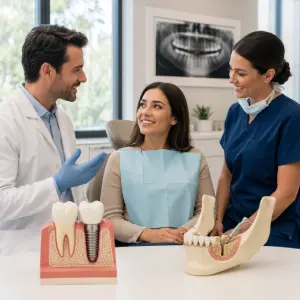
If you are searching for an implant dentist in San Bernardino, you have probably noticed that some practices emphasize implant dentistry, while others recommend an oral surgeon for placement. That can make an important decision feel confusing, especially when you just want a safe plan and a natural-looking result.
This guide explains the difference between an implant dentist and an oral surgeon, when each option makes sense, and what to ask so you can choose a provider with confidence.
TL;DR - How To Choose the Right Implant Provider
The best choice is not about a job title alone. It is about planning, experience with cases like yours, and clear coordination between implant placement and the final tooth.
- Many dental implants can be placed by a dentist with implant training; complex cases may benefit from an oral surgeon or co-managed care
- Ask how your implant will be planned and how your bite and final crown will be designed
- Look for a provider who discusses bone and gum health before scheduling surgery
- Comfort matters: ask about anesthesia and sedation options
- Choose a team that explains maintenance and follow-up, not just the procedure day
In our previous blog, "Top 5 Benefits of Implant Dentistry in San Bernardino," we discussed why implants can be such a strong tooth-replacement option. In this article, we focus on how to choose the right clinician to place and restore them.
What an Implant Dentist Does (And What to Ask)
An implant dentist is a general dentist who has additional training and experience in planning and placing dental implants, restoring implants with crowns, or coordinating care. Many patients like the convenience of a single office that can manage the full plan from diagnosis to the final crown.
Key strengths patients often look for in an implant dentist
- Restorative planning first: the implant is positioned to support the final crown in a functional, cleanable way
- Whole-mouth perspective: your bite, gum health, and neighboring teeth are considered before placement
- Continuity of care: the same team often handles follow-ups and long-term maintenance
If you want to see how implants are described in more detail, our dental implants in San Bernardino service page explains the basics of replacing missing teeth with implants.
What an Oral Surgeon Does for Dental Implants
An oral surgeon (oral and maxillofacial surgeon) is a surgical specialist trained to perform procedures involving the mouth, jaws, and facial structures. Some implant cases are more surgical in nature and may be better suited for an oral surgeon, especially when anatomy or medical factors add complexity.
When an oral surgeon may be a strong fit
- More complex surgical needs: challenging extractions, significant bone deficiency, or complicated anatomy
- Medical considerations: certain health histories may require more advanced surgical planning
- Combined procedures: situations where multiple surgical steps may be needed
Implant Dentist San Bernardino: How to Decide Based on Your Case
When patients compare implant dentistry in San Bernardino, the most helpful question is not "dentist or oral surgeon?" It is "who is best equipped to plan my implant for the final result, and who will manage the steps if anything changes along the way?"
Use these decision points (they are more important than titles)
- Planning and imaging: Ask what imaging is used to evaluate bone volume, nerve locations, and implant position before surgery.
- Restoration-driven placement: Ask who decides where the implant goes in relation to the final crown and your bite.
- Bone and gum health: Ask whether you might need grafting or periodontal care and how that is handled.
- Comfort options: Ask what anesthesia or sedation options may be appropriate for you.
- Maintenance plan: Ask how follow-ups, cleaning guidance, and implant checks are handled over time.
Questions To Ask at Your Implant Consultation
Bring these questions to your visit. A quality consultation should feel like a plan, not a sales pitch.
- What are my options besides an implant? (A bridge or denture may be appropriate in some situations.)
- Who will place the implant and who will place the crown?
- What is the backup plan if bone is thinner than expected?
- How will you protect my smile and bite long-term?
- What should I expect for healing and aftercare?
Experience-based observation from our team: many implant complications we see in dentistry are not due to "implant failure" in a simple sense, but from planning issues like positioning that makes the final crown hard to clean or forces the bite to overload the implant. That is why planning for the final tooth and hygiene access is a big part of a responsible implant conversation.
Comfort and Safety: Where Sedation Fits In
Some patients avoid treatment because they are anxious about surgery or dental visits in general. If that sounds familiar, ask about comfort options early.
Our sedation dentistry page explains how sedation can help patients feel calmer during certain procedures, depending on their needs and the treatment plan.
FAQs
Related Reading
Conclusion: Choose the Plan and the Team, Not Just the Title
Whether your implant is placed by an implant dentist, an oral surgeon, or through co-managed care, you deserve a clear plan that prioritizes safety, function, and a final tooth that is comfortable and easy to maintain. If you have questions about your options, schedule a consultation with Dr. Myron Massey and our team to review your case and next steps.
Schedule Your Implant Consultation
To discuss implant dentistry and find out what approach fits your needs, call our office at 909-888-1301.
