
Dental Implants or a Bridge? A Practical Choice Guide
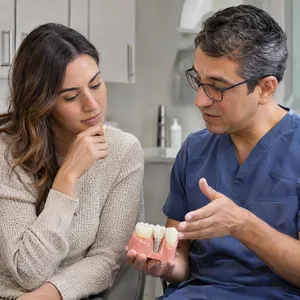
Losing a tooth is more than a cosmetic issue. A gap can change how you chew, invite nearby teeth to drift, and make the area harder to keep clean. For many patients comparing dental implants in San Bernardino to a bridge, the decision is less about trends and more about picking the option that fits your mouth and your long-term priorities.
This guide explains the most important tradeoffs between implants and bridges, what usually drives cost, and which option tends to fit common real-life situations we see in implant dentistry.
TL;DR - Implants vs. Bridges in San Bernardino
Choose a dental implant when you want a stand-alone replacement and strong long-term support. Choose a bridge when neighboring teeth already need crowns or when a shorter, non-surgical path fits your needs.
- Biggest difference: a bridge relies on neighboring teeth; an implant usually does not.
- Time: bridges are often faster; implants often require healing time.
- Longevity: both can last, but they age differently and have different weak points.
- Bone and gums: implants depend on adequate support; bridges depend on strong support teeth.
- Best next step: an exam to evaluate the space, bite, gums, and the teeth next to the gap.
In our previous blog, "How to Choose: Dental Crowns and Bridges | San Bernardino" we discussed how crowns and bridges work together. In this article, we focus on the missing-tooth decision many patients are stuck on: implant vs bridge.
What You Are Really Choosing When You Replace a Missing Tooth
It helps to think in plain terms:
- A bridge replaces a tooth by using the teeth on either side as anchors.
- A dental implant replaces a tooth using an implant in the jaw that supports a crown, without needing to reshape neighboring teeth in the same way.
If you want a deeper look at each option, our service pages cover the basics of dental implants and what to expect with a dental bridge.
Side-by-Side Comparison: Dental Implants vs. Bridges
Patients researching directories and "compare options" pages often find the information scattered. Here is a clearer, dentist-style comparison you can use to guide questions at your visit.
| Decision Factor | Dental Implant | Dental Bridge |
|---|---|---|
| What It Replaces | Typically replaces one missing tooth with an implant-supported crown. | Replaces one or more missing teeth by spanning the gap with connected crowns. |
| Effect on Neighboring Teeth | Usually does not require reshaping adjacent teeth to support the replacement. | Often requires reshaping the teeth next to the gap so crowns can support the bridge. |
| Bone/Gum Requirements | Requires healthy gums and enough support for the implant site. | Requires strong, healthy support teeth and stable gums around them. |
| Treatment Time | Often includes healing time between steps. | Often completed in fewer visits over a shorter timeframe. |
| Cost Drivers | Number of implants, type of restoration, and any added treatment steps needed. | Number of units (crowns), condition of support teeth, and complexity of bite/fit. |
| Maintenance | Brush, floss, and keep regular cleanings; gum health is critical around the implant. | Brush and clean carefully under the bridge area; plaque control under the span matters. |
| Long-Term Considerations | Long-term success depends heavily on gum health and maintenance habits. | Long-term success depends on keeping the support teeth and the bridge area healthy. |
Which Option Fits Which Patient Scenario?
Dental Implants Often Make Sense When...
- You want a stand-alone replacement that does not depend on neighboring teeth for support.
- The teeth next to the gap are healthy and you would rather not reshape them for crowns.
- You want a solution designed for long-term function and are comfortable with a longer timeline.
- You are looking for implant dentistry solutions that feel and function like a natural tooth.
A Bridge Often Makes Sense When...
- The teeth next to the gap already need crowns, so a bridge can solve multiple issues at once.
- You prefer a fixed option that is often completed faster than an implant plan.
- You want to avoid a surgical step and your dentist confirms a bridge is appropriate for your bite and support teeth.
How San Bernardino Patients Can Make the Decision Faster (Without Guessing)
The most helpful way to avoid endless researching is to focus on three clinical questions your exam should answer:
- Are the teeth next to the gap strong enough to support a bridge? If they are compromised, a bridge may inherit that risk.
- Is the implant site healthy enough for implant placement? This depends on gum health, bite forces, and the quality of support at the site.
- What is the simplest plan that protects the rest of your mouth? Sometimes the "best" option is the one that reduces future complications for surrounding teeth and gums.
Experience-based observation from our team: patients are often surprised that the condition of the teeth next to the space is what decides the case. When adjacent teeth already need crowns, a bridge can be a very logical solution. When adjacent teeth are healthy, many patients prefer an implant so they do not have to change those teeth.
Why This Topic Matters for Implant Dentistry in San Bernardino
Many page-one results and directories encourage side-by-side shopping. The problem is that those sources may not explain the hidden tradeoffs, such as how a bridge affects the neighboring teeth or why some implant plans take longer. A personalized evaluation with Dr. Myron Massey can clarify what is realistic for your bite, your gum health, and your goals.
FAQs
Related Reading
- Dental Implants
- Dental Bridges
- Implant Dentist vs. Oral Surgeon in San Bernardino
- Top 5 Benefits of Dental Implants in San Bernardino
Conclusion: Pick the Option That Protects the Rest of Your Smile
A bridge can be a smart, efficient way to replace a missing tooth, especially when neighboring teeth need crowns anyway. Dental implants are often chosen when patients want a stand-alone replacement and want to avoid changing the teeth next to the gap. The right answer is the one that fits your mouth today and supports your long-term maintenance.
Schedule a Tooth Replacement Consultation
If you want help comparing an implant and a bridge for your specific missing-tooth situation, call 909-888-1301 to schedule a visit with Dr. Myron Massey.
You can also review all options on our services page.
Request an Appointment