
Root Canal Or Extraction? A Practical Decision Guide For A Painful Tooth
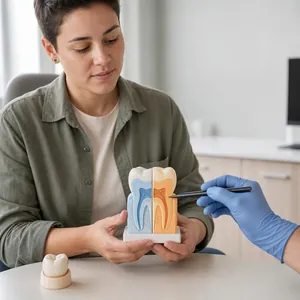
When you have a painful tooth, the question often becomes urgent: should you try to save it with a root canal, or is it time to remove it? If you are searching for root canal treatment in San Bernardino, you are likely looking for a clear answer that balances comfort, long-term function, and cost.
This guide explains how dentists typically decide between root canal therapy and extraction, what usually happens after each choice (including crowns and replacement options), and what questions to ask during your exam with Dr. Myron Massey.
TL;DR - How Dentists Decide Between Saving vs Pulling
The best choice is the one that gives you the most predictable, healthy outcome over time. That decision depends on infection severity, how much tooth is left, and whether the tooth can be restored and supported.
- Root canal: often preferred when the tooth can be restored and is worth saving long-term
- Extraction: more likely when the tooth is too damaged, cracked too deeply, or has poor bone/gum support
- Plan for what comes next: saving a tooth often needs a crown; pulling a tooth often needs a replacement plan
- Timing matters: swelling, severe pain, or spreading infection can turn into an emergency
- Ask about prognosis: the goal is to avoid repeated infections or short-lived fixes
In our previous blog, "Signs You Need Root Canal Treatment in San Bernardino" we discussed symptoms that can signal nerve infection or inflammation. In this article, we focus on the save-versus-pull decision and what typically comes next.
Why This Choice Is Not Just About Pain
Many competitors oversimplify the decision as "root canal saves, extraction removes." In real life, the right answer depends on whether saving the tooth is predictable. A tooth can sometimes be treated, but still have a poor long-term outlook if it cannot be sealed, rebuilt, or supported properly.
Experience-based observation from our team: the patients who feel most confident afterward are the ones who leave the exam with two things spelled out clearly, the prognosis for saving the tooth and a replacement plan if extraction becomes the better route.
Root Canal Treatment in San Bernardino: When Saving the Tooth Makes Sense
A root canal is typically considered when the nerve tissue inside the tooth is infected or inflamed, but the outer tooth structure can still be restored. The goal is to remove infected pulp, disinfect the inside of the tooth, and seal it so bacteria cannot keep re-entering.
If you want to read about how root canal therapy works, our root canal treatment page explains the basics and common questions patients ask.
Common Reasons Dentists Recommend a Root Canal
- Deep decay that reaches the nerve, but the tooth can still be rebuilt
- Infection (abscess) that can be cleaned and sealed with a good prognosis
- Old dental work that fails and allows bacteria to reach the nerve
- Tooth trauma where the nerve is damaged but the tooth is still structurally sound
What Often Comes Next: The Role of a Crown
After root canal therapy, many teeth need added protection because they can become more prone to fracture, especially back teeth that take heavy bite forces. That is why your dentist may recommend a crown.
If you have questions about materials or when crowns are used, our dental crowns page is a helpful next step.
When Extraction Is the Safer Choice
Extraction is not a "failure." Sometimes it is the most responsible option when saving the tooth is unlikely to hold up. The goal is to remove a source of infection or pain and then protect your bite and long-term oral health with an appropriate replacement plan.
Decision-Making Factors That Often Point Toward Extraction
- Not enough tooth structure left: if the tooth cannot be rebuilt securely, even after treatment
- Cracks that extend too deep: certain fractures compromise the foundation of the tooth
- Severe gum or bone support loss: even a treated tooth may remain loose or unstable
- Repeated issues on the same tooth: if prior treatment has not held up and the outlook is poor
A Simple Comparison: What Happens After Each Choice
If You Choose a Root Canal
- Main goal: keep your natural tooth in place and functioning
- Typical next step: a final restoration (often a crown) to seal and strengthen the tooth
- Long-term focus: keeping the tooth cleanable, sealed, and stable
If You Choose Extraction
- Main goal: remove an unsalvageable tooth and stop ongoing infection or pain
- Typical next step: discuss replacement to protect chewing function and prevent shifting
- Common replacement paths: bridge or implant, based on your specific needs
For patients considering bridging a gap, our dental bridges page explains how bridges work and when they may be recommended.
If you are exploring long-term tooth replacement, our dental implants page covers how implants can replace missing teeth and support oral function.
Emergency Signs: When You Should Be Seen Right Away
Some symptoms suggest the situation may be urgent and should not wait. If you suspect infection or you cannot sleep due to pain, it is worth calling for guidance.
- Facial swelling or swelling inside the mouth
- Fever, chills, or feeling generally unwell
- Severe, worsening pain or a bad taste/drainage
- Trouble swallowing or opening your mouth
If you need help quickly, visit our emergency dentistry page to learn what qualifies as urgent and how to get care.
Questions To Ask During Your Exam (Bring This Checklist)
A good evaluation should feel like a clear plan, not a rushed decision. Consider asking:
- Can this tooth be restored predictably? What is the long-term prognosis if we try to save it?
- How much healthy tooth is left? Will it likely need a crown or another type of restoration?
- Is there a crack? If so, how does that affect whether a root canal is worthwhile?
- What are my replacement options if we extract? Which option fits my bite and budget best?
- What is the expected timeline for relief? When should pain improve and what should prompt a follow-up?
FAQs
Related Reading
Conclusion: Choose The Option With The Best Long-Term Prognosis
The goal is not just to stop pain today. It is to choose the path that gives you a stable, healthy bite you can maintain. Sometimes that means saving the tooth with root canal therapy and a strong restoration. Other times, extraction with a clear replacement plan is the most predictable solution.
Schedule An Exam To Get A Clear Answer
If you are dealing with tooth pain and want a clear plan, call 909-888-1301 to schedule a visit with Dr. Myron Massey.
You can also review our full range of care on the services page.
Request an Appointment